
What is a CPA network, and how does it work?
A CPA network connects advertisers who pay for results with publishers who deliver them. Here is how tracking, payouts and fraud checks work, from click to payment.
Read the article
Ask ten marketers why a campaign failed and you will often hear some version of the same answer: it was asking the wrong people for the wrong thing. A video built to make strangers notice a brand gets judged on sales. A discount code meant for ready buyers gets shown to people who have never heard of you.
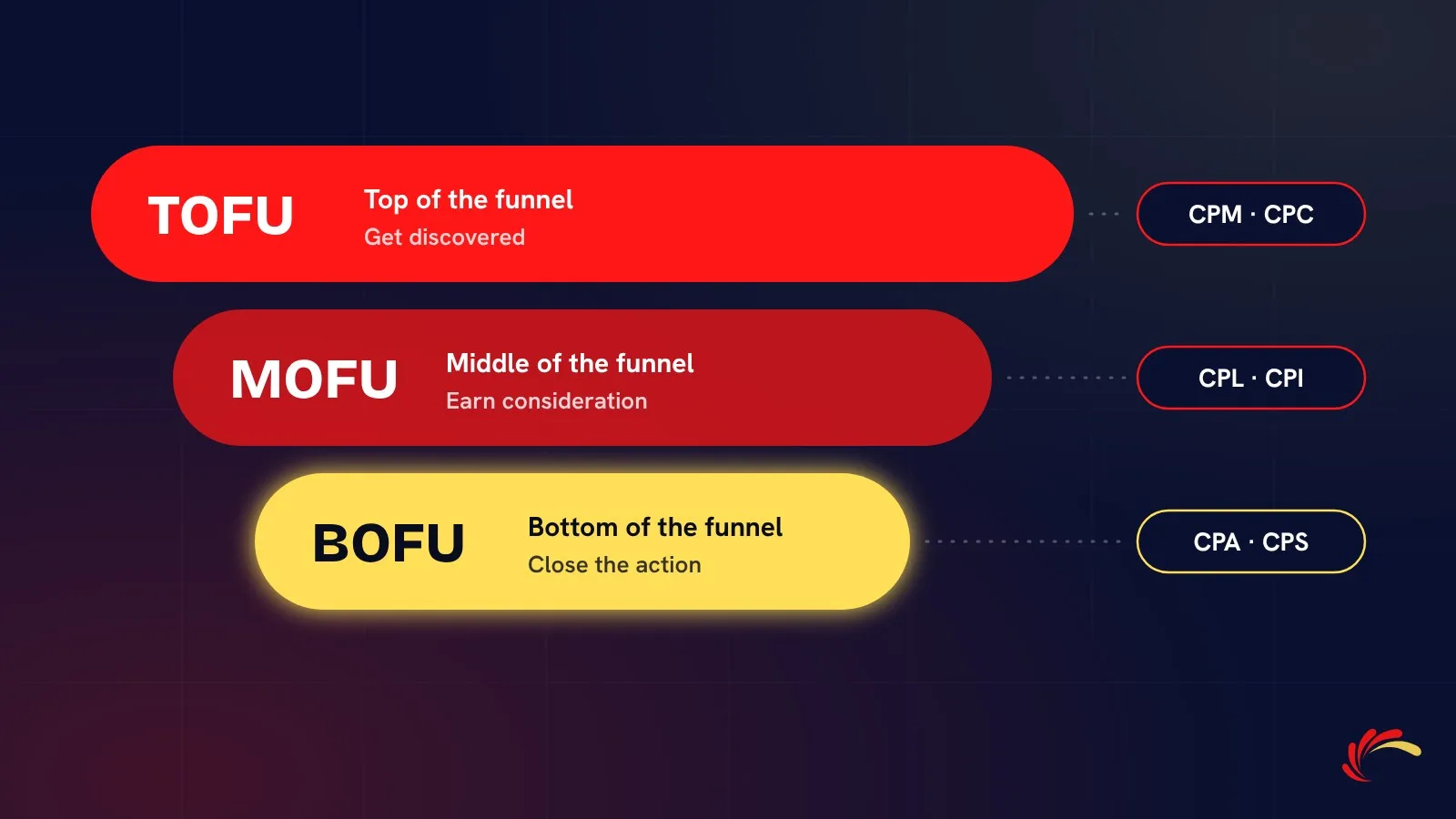
The TOFU, MOFU, BOFU framework exists to stop that. It splits the funnel into three stages and gives each one its own goal, its own audience and its own way of being measured. For performance marketers it does one more useful thing: it tells you which pricing model makes sense at each stage.
If you have read our piece on the AIDA model, this will feel familiar. TOFU lines up with Awareness, MOFU with Interest and Desire, and BOFU with Action. The difference is mostly in how teams use it: AIDA describes how a person thinks, while TOFU, MOFU and BOFU are used to plan content, channels and budgets.
Quick test: if the person seeing your ad would ask "who are you?", you are at the top. If they would ask "why you and not the others?", you are in the middle. If they would ask "how do I start?", you are at the bottom.
At the top of the funnel you are talking to a large, cold audience. Most of them are not looking for you, so the message has to earn attention in a second or two and say clearly what you do.
What works: short video, display and native placements, social reach, influencer content, and helpful articles that answer broad questions.
What you measure: reach, impressions, viewability, click-through rate, cost per landing-page visit and, over time, growth in searches for your brand name.
How it is usually bought: CPM (cost per thousand impressions) or CPC (cost per click). You are paying for attention, so you pay for exposure or for the first visit.
The common mistake: judging TOFU on sales. A top-of-funnel campaign that brings thousands of new people to your site may show very few purchases in its first week and still be doing its job. Judge it on the cost of reaching new, relevant people, and on how many of them move to the next stage later.
In the middle, people know your name and are weighing you against alternatives. They want proof: what you do, who it is for, what it costs and what others say about you.
What works: comparison pages, case studies, reviews and ratings, product demos, free tools, webinars, email sequences, and retargeting people who visited but did not act.
What you measure: leads, sign-ups, app installs, add-to-carts, email opt-ins, and the cost of each.
How it is usually bought: CPL (cost per lead) and CPI (cost per install) fit naturally here. You pay when someone raises a hand: fills in a form, registers or installs your app. For lead campaigns, agree what counts as a qualified lead before launch. It saves arguments later.
The common mistake: collecting leads or installs with no plan for what happens next. An install that never opens the app, or a lead nobody calls back, is cost without value. MOFU only works if the next step is ready.
At the bottom of the funnel, people are ready. The job is to remove friction and give them a reason to act today rather than next week.
What works: retargeting with a clear offer, coupon and cashback partners, deal and comparison sites, search ads on high-intent keywords, free trials, and short checkout or sign-up flows.
What you measure: purchases, deposits, first transactions, subscriptions, conversion rate, cost per acquisition and return on ad spend.
How it is usually bought: CPA (cost per action) or CPS (cost per sale, either a fixed amount or a share of the order). You pay only when the outcome you care about happens, which is why most affiliate programmes live here.
The common mistake: putting everything into BOFU because it looks the most efficient. Bottom-of-funnel traffic converts well partly because the other stages already did the work. Cut the top completely and the bottom slowly runs dry.
Every pricing model moves risk between you and the network or publisher. The further down the funnel you go, the more risk the partner carries, and the higher the payout per result usually is.
We go deeper into the trade-offs, and how to work out a payout you can afford, in CPI, CPA, CPL or CPS: how to pick the right pricing model.
There is no single split that works for every business. It depends on how well known you already are, how long people take to decide, and how much a customer is worth over time. A few rules of thumb help:
Whatever split you start with, review it every few weeks. Check whether each stage is feeding the next, not just whether each one hits its own number.
Funnel planning only works if you can see people move from one stage to the next. That needs three things:
And remember that the funnel does not end at the sale. A customer who comes back, renews or refers a friend is worth far more than one who buys once. That is why we add a fifth step, Retention, to our own version of the funnel.
A performance network can help at every stage, but it is strongest where you can define a result and pay for it: MOFU and BOFU. At Adperience Media, advertisers choose the event they want (a lead, an install, a registration, a deposit or a sale) and the price they will pay for it. Publishers in 140+ countries send the traffic, and suspicious conversions are filtered out before they reach your invoice.
If you are planning a campaign, the fastest way to start is to tell us your target event, your target CPA and the geos you want. Our briefing checklist covers everything else that helps, or simply send us your brief and we will reply with a proposal by email.
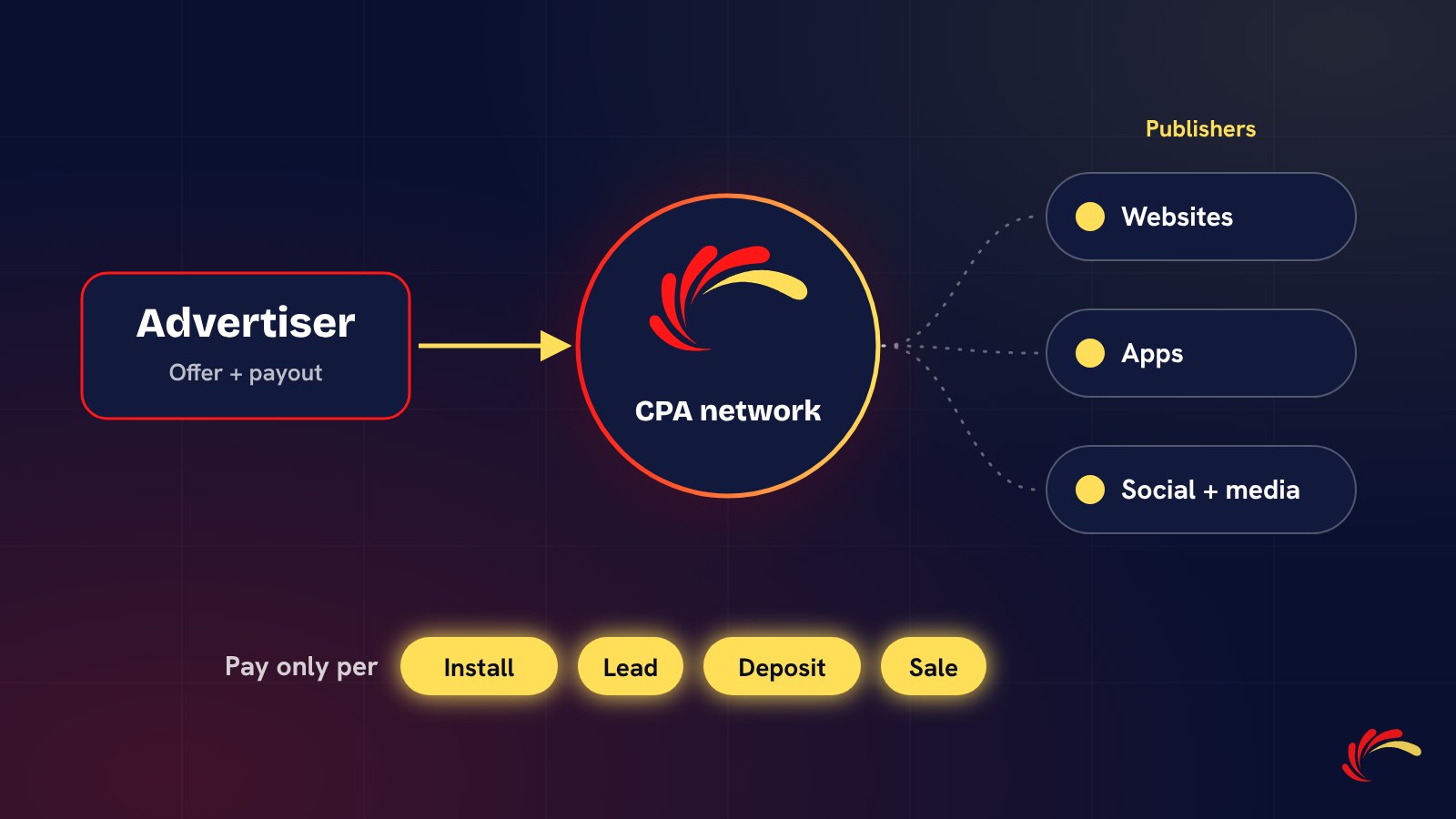
A CPA network connects advertisers who pay for results with publishers who deliver them. Here is how tracking, payouts and fraud checks work, from click to payment.
Read the article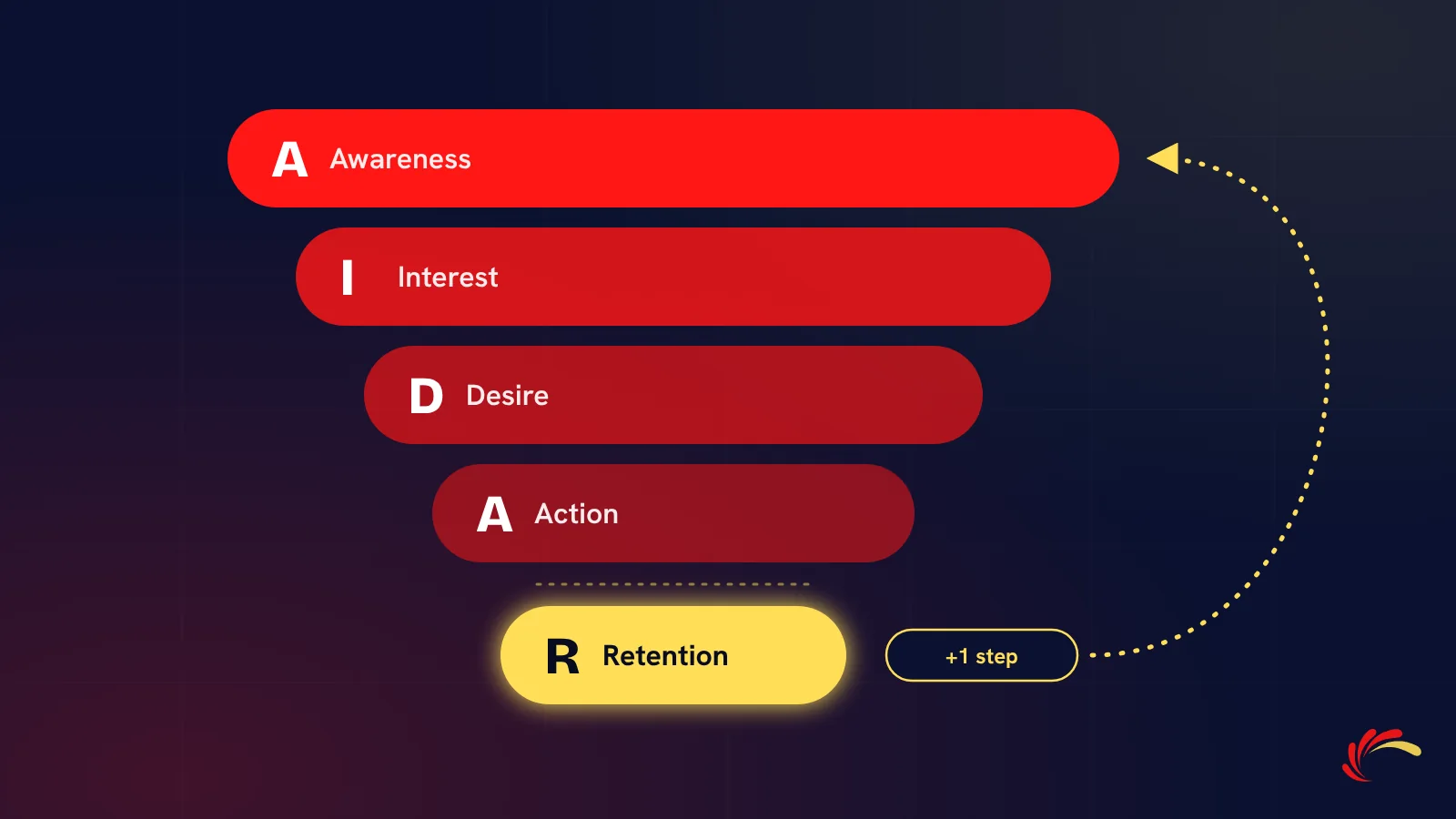
Awareness, Interest, Desire, Action. The oldest funnel in marketing still explains every app campaign you run. Here is how each step shows up in your dashboard, and why we added a fifth letter.
Read the article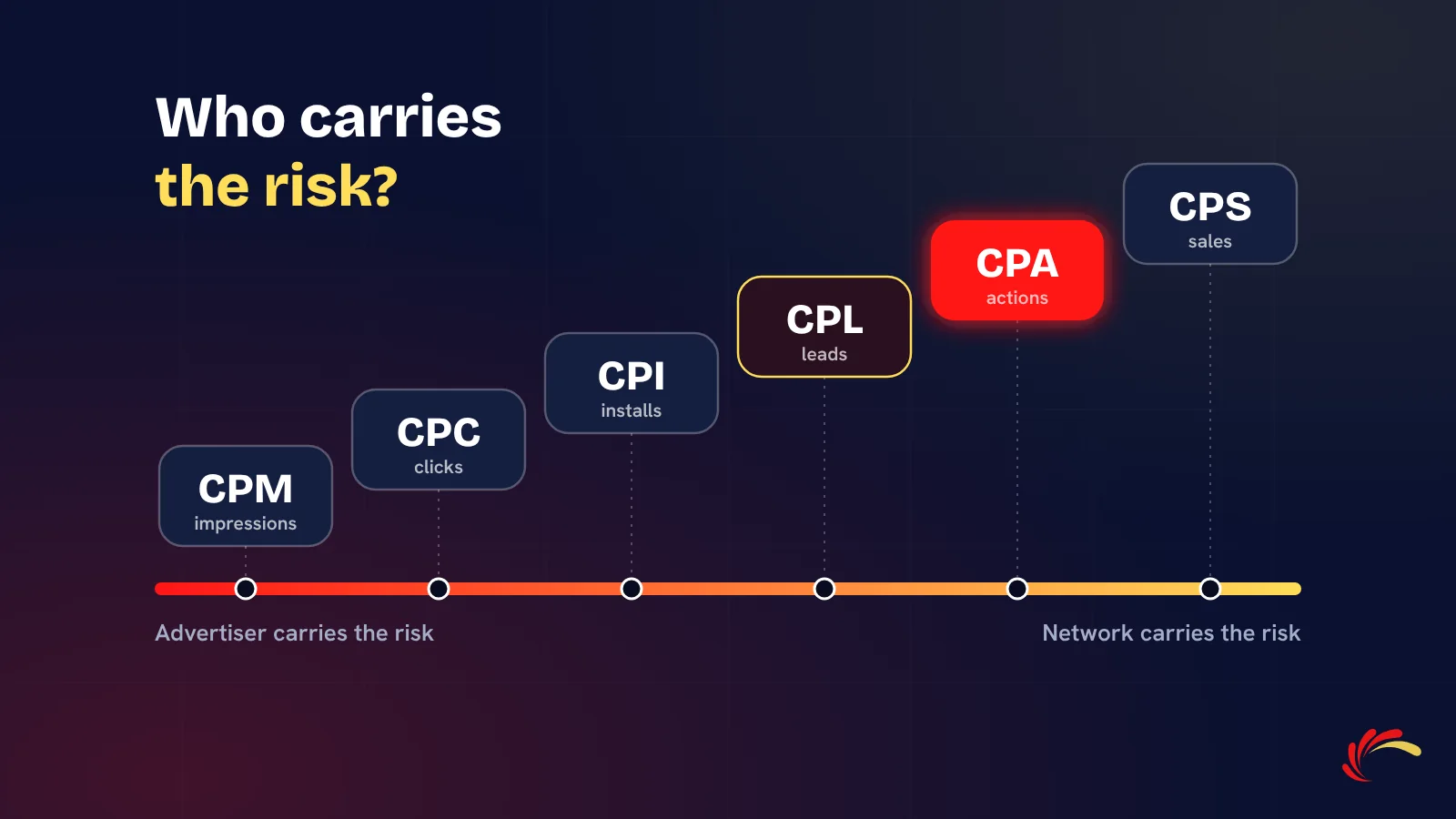
Each model shifts risk between you and the network. Here is how to choose one, and how to work out a payout you can afford.
Read the articleSend your product, geos, target event and CPA, and we will reply with a proposal by email.