
What is a CPA network, and how does it work?
A CPA network connects advertisers who pay for results with publishers who deliver them. Here is how tracking, payouts and fraud checks work, from click to payment.
Read the article
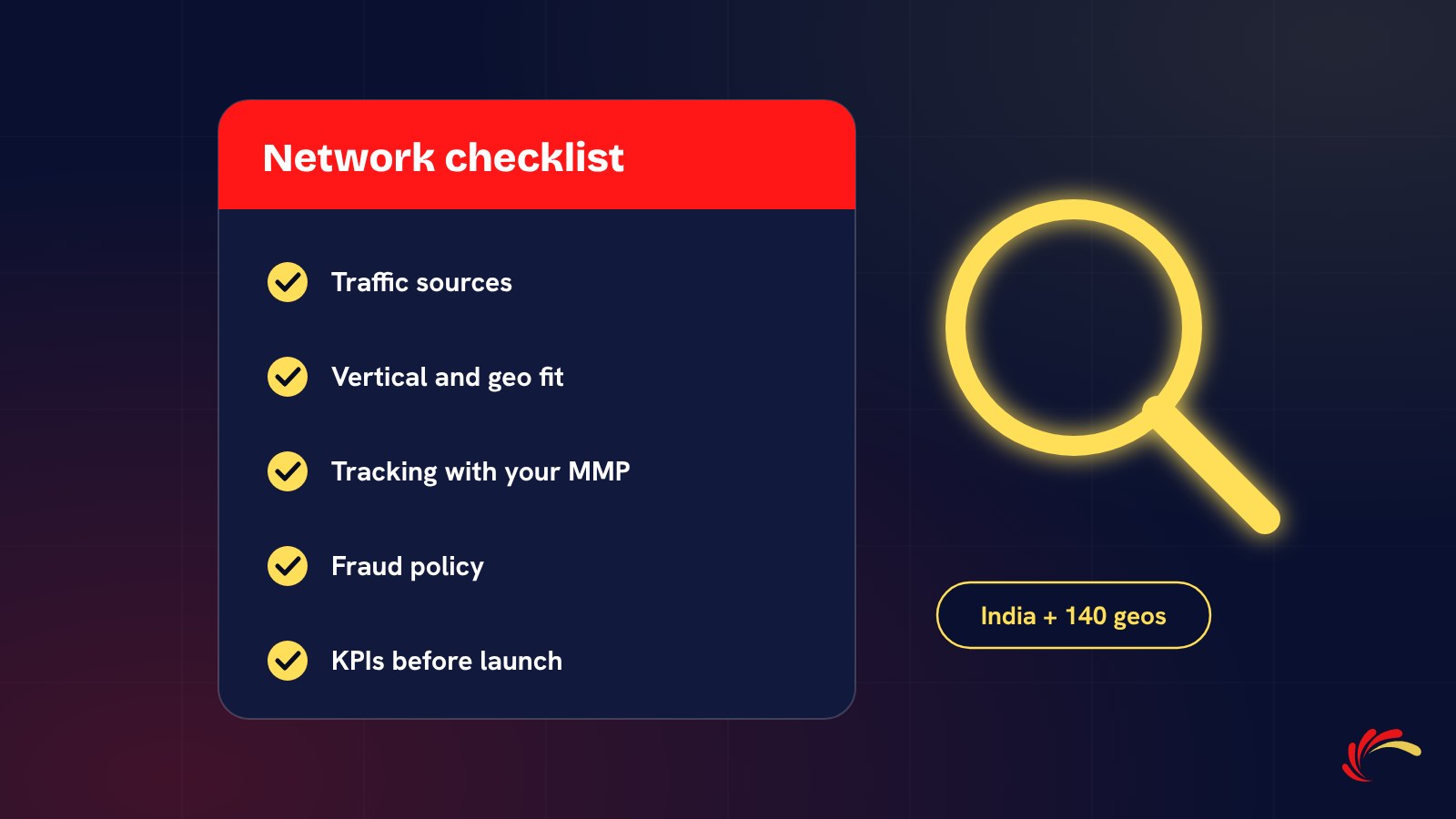
India has hundreds of affiliate and performance networks, and from the outside most of them look the same. The websites promise reach, quality and fast results. The difference only shows up a few weeks into a campaign, when you look at retention, rejection rates and invoices.
This guide is a practical checklist for advertisers choosing a network in India, whether you are launching an app, a fintech product, an edtech course or an e-commerce store. Use it before you sign anything, and use it again after the first month.
New to the model? Start with what a CPA network is and how it works, then come back to this checklist.
The most important question is also the one networks answer least clearly: who actually sends the users?
Ask for a breakdown of traffic types for your offer: in-app, web, social, search, push, email, incentivised or not. A good network will tell you which sources it plans to use and will ask for your permission before adding new ones.
A network that runs gaming installs very well may have no strong publishers for loan leads, and the reverse. Ask:
You will rarely get client names, but a network with real experience can describe the campaigns in detail.
For apps, the standard is server-to-server tracking through your attribution partner, often called an MMP, such as AppsFlyer, Adjust or Branch. The network should already be an integrated partner in your MMP, so setup takes minutes rather than days.
For websites and lead forms, confirm how conversions are reported back: a postback from your CRM or backend is more reliable than a browser pixel. Either way, you and the network should see the same numbers on the same dashboard logic.
Every network says it fights fraud. What matters is the detail:
Our article on the seven signs of install fraud is a good list to bring to that conversation.
A payout alone is not a deal. Write down what a "good" user looks like for you, for example a minimum day-1 retention, a share of users who complete KYC, or a lead approval rate. Agree what happens when a source falls below it: paused, replaced, or not paid for. Networks that are confident in their traffic will accept clear KPIs.
You will work with an account manager every week. Notice how quickly they reply, whether they ask good questions about your product, and whether they send reports without being asked. A responsive team that pauses a bad source in an hour saves more money than a slightly lower payout.
The best way to choose is to test two or three networks with the same offer, the same payout and the same KPIs for two to four weeks. Compare them on the metrics that reach your bank account: approved conversions, retention or approval rates, and cost per good user, not just volume.
Adperience Media is a performance network based in Lucknow, with direct publishers in India and more than 140 countries. We share traffic sources for every campaign, check conversions for fraud before billing, and agree KPIs before launch. If you would like us to be one of the networks in your test, send us your product, geos, target event and CPA and we will reply with a proposal by email.
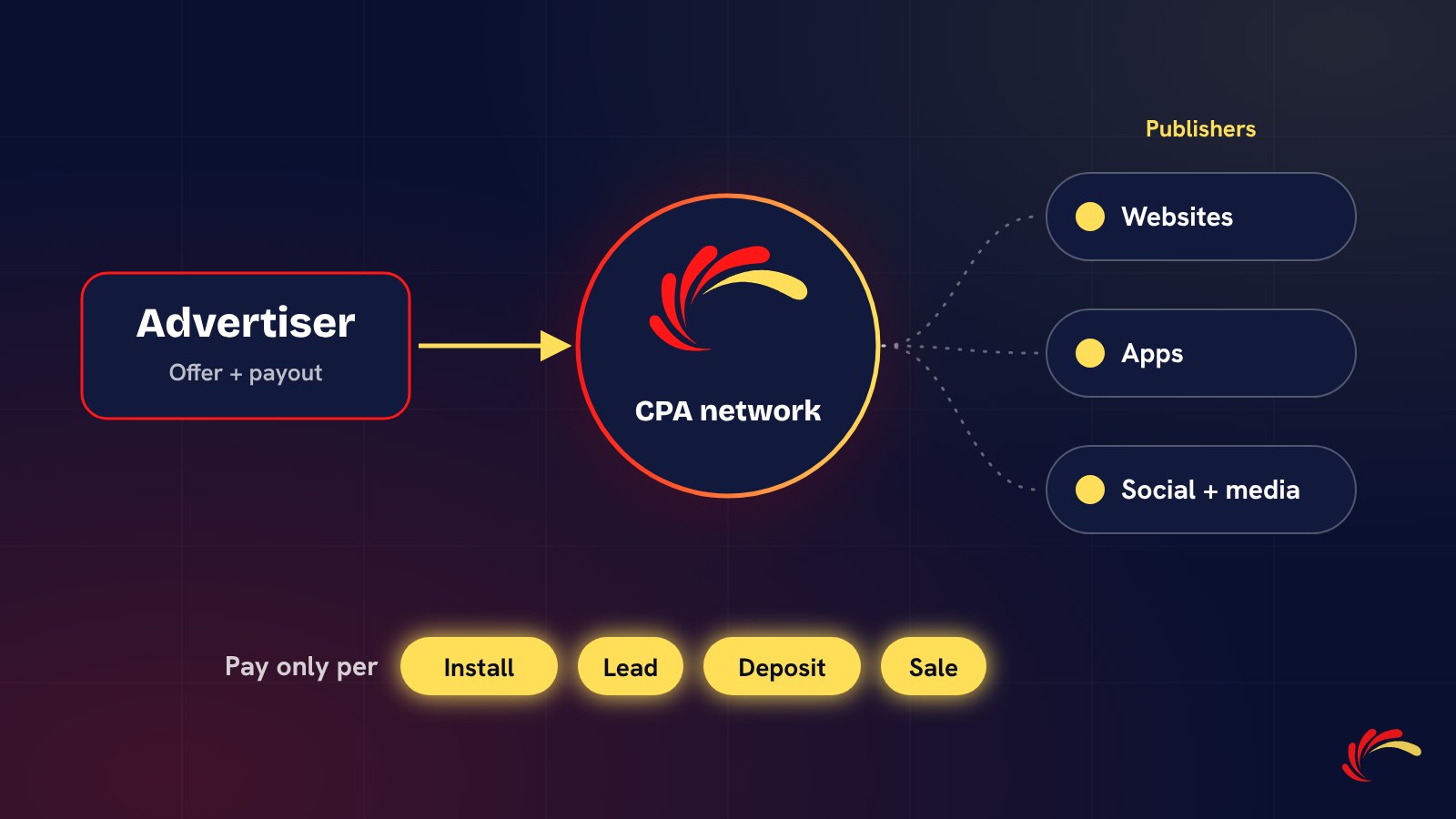
A CPA network connects advertisers who pay for results with publishers who deliver them. Here is how tracking, payouts and fraud checks work, from click to payment.
Read the article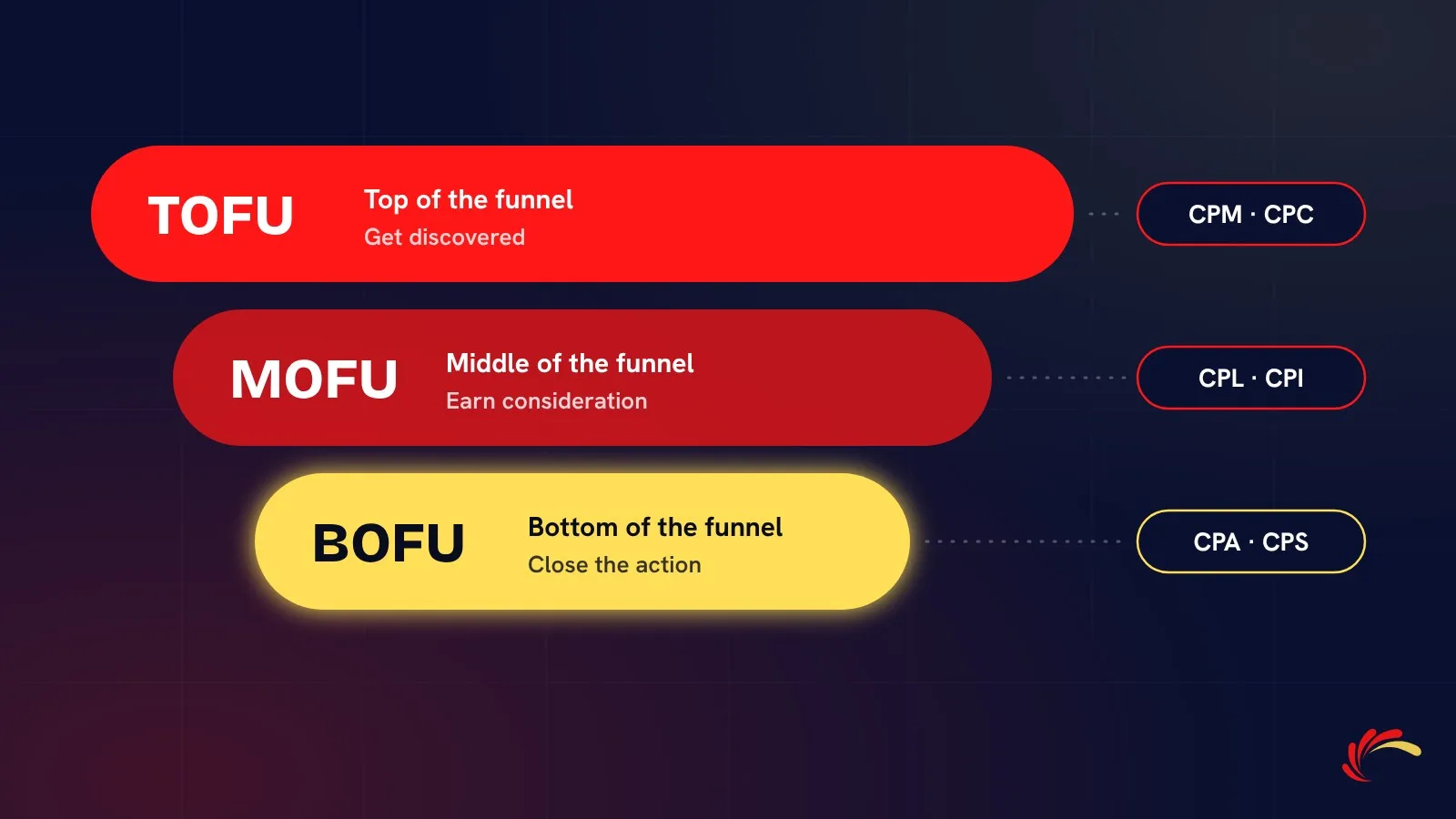
Top, middle and bottom of the funnel need different goals, channels and pricing models. Here is how to plan, measure and pay for each stage without wasting budget.
Read the article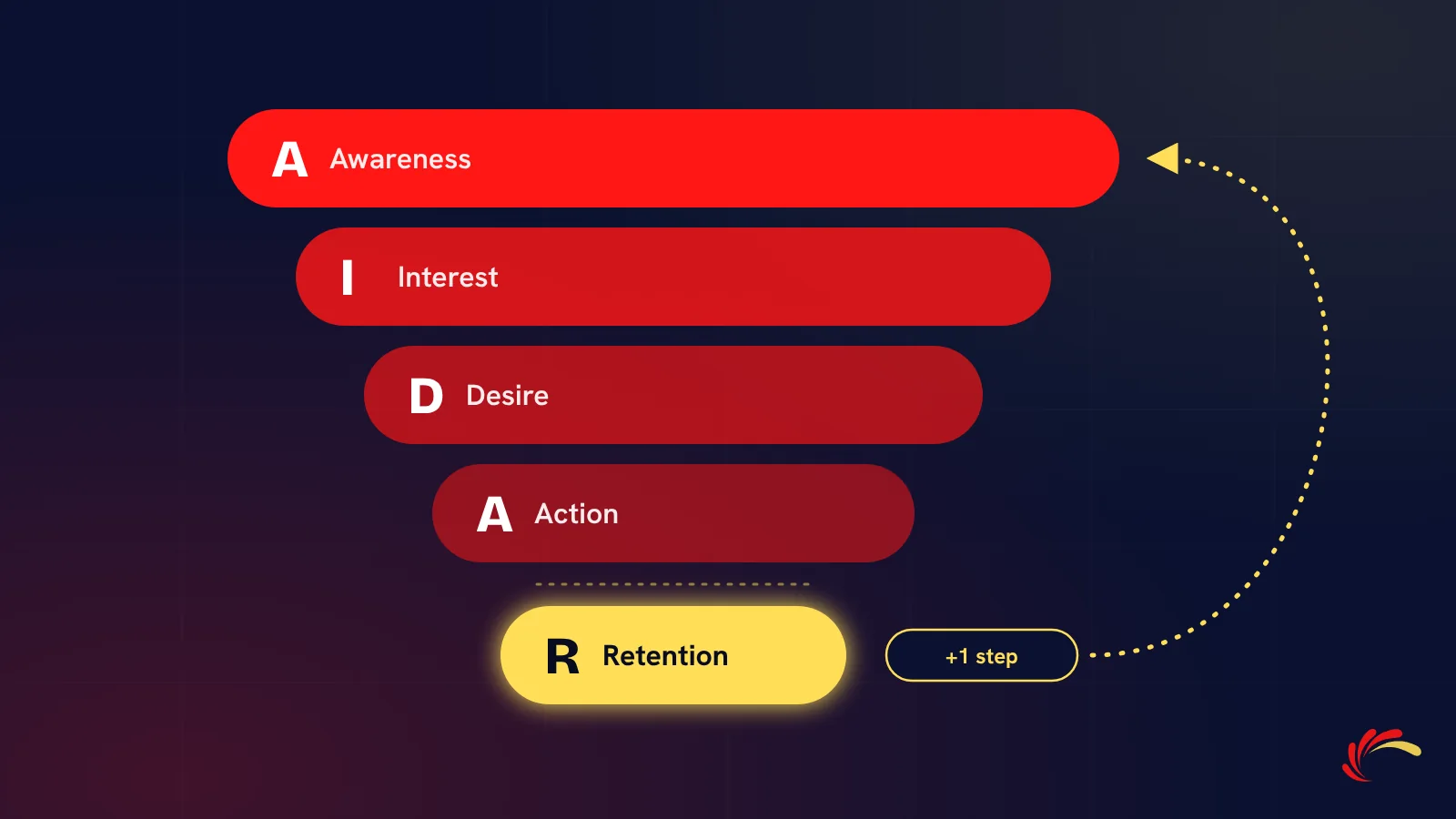
Awareness, Interest, Desire, Action. The oldest funnel in marketing still explains every app campaign you run. Here is how each step shows up in your dashboard, and why we added a fifth letter.
Read the articleSend your product, geos, target event and CPA, and we will reply with a proposal by email.