Long before there were install postbacks and attribution partners, advertisers already knew that nobody buys the moment they see an ad. People move through stages. The model that names those stages is called AIDA, and it is usually credited to the American advertising pioneer E. St. Elmo Lewis, around the turn of the twentieth century.
More than a hundred years later it still works, because people have not changed much. What has changed is that every stage now has a number attached to it. That makes AIDA one of the most practical tools a performance marketer can carry.
What AIDA is
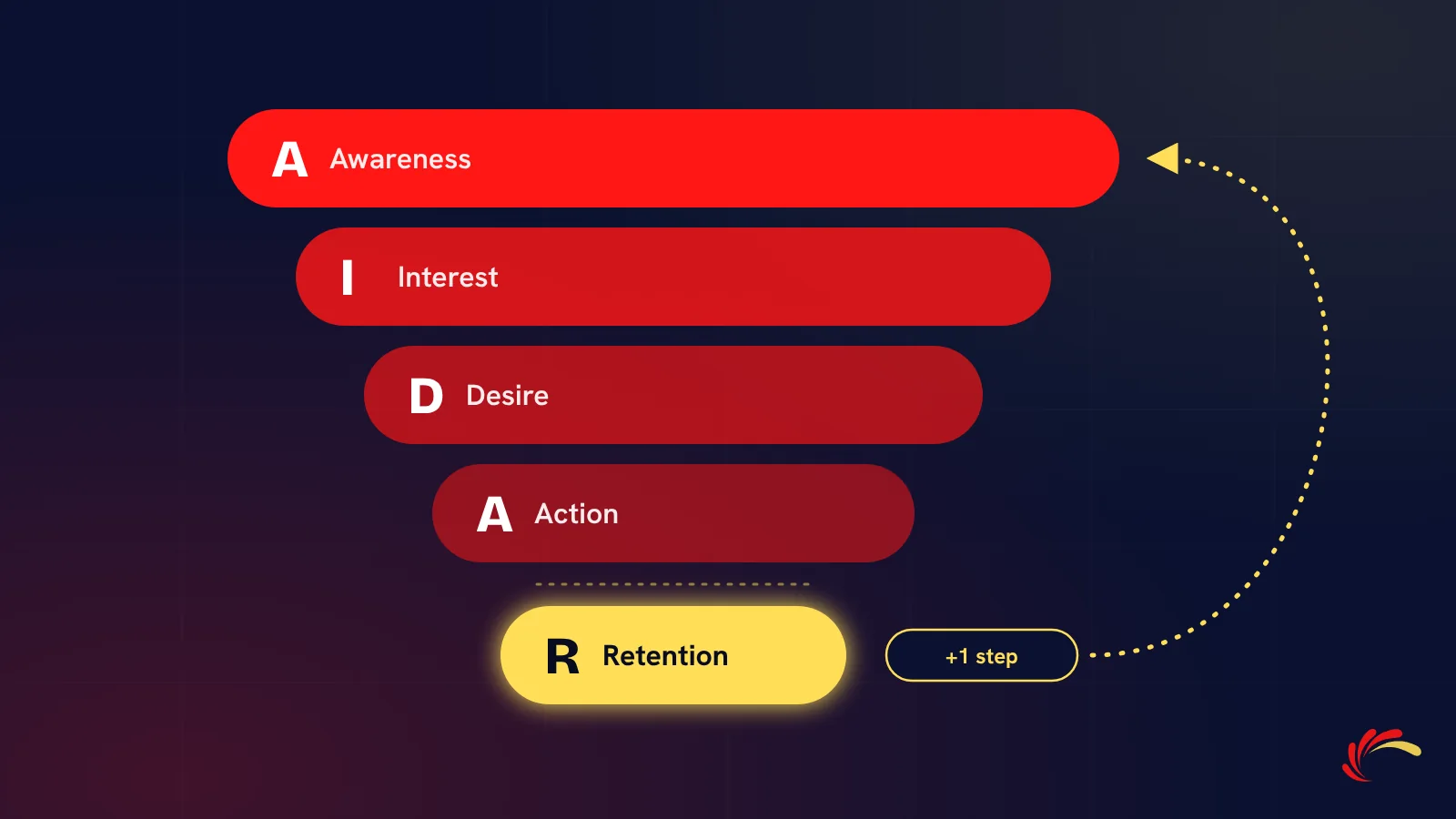
AIDA stands for Awareness, Interest, Desire and Action. A person first notices you, then gets curious, then starts to want what you offer, and finally does something about it. Every ad, landing page and store listing is trying to move someone one step further along that path.
New to this? Think of the last app you installed. You saw it somewhere (awareness), something made you look closer (interest), you read about it and liked what you saw (desire), and you tapped Install (action). That is AIDA.
A: Awareness
The person sees your brand for the first time. Nothing has to happen yet; they just need to notice you.
What you measure: impressions, reach, frequency and viewability. On CPM buys this is literally what you pay for.
What goes wrong: cheap reach in the wrong place. A million impressions in a geo you do not serve, or on placements nobody actually looks at, fills the top of the funnel with people who will never move down it. Awareness only counts when it reaches the audience you can convert.
I: Interest
Something in the ad makes the person curious enough to stop and tap. This is the job of the creative: the hook, the offer, the first two seconds of a video.
What you measure: clicks, click-through rate (CTR) and cost per click (CPC).
What goes wrong: a strong offer hidden behind a weak creative, or a clickbait creative that promises something the product does not deliver. The second one looks great on CTR and terrible everywhere after it. Test creatives against the events further down the funnel, not just against clicks.
D: Desire
The person lands on your store page, website or form and decides whether they want what you offer. This is the stage most performance teams forget to own, because it does not sit inside the ad platform.
What you measure: store page views, page conversion rate (visits to installs), lead form completion and cost per lead (CPL).
What goes wrong: paid traffic sent to a page that was never built to convert it. Old screenshots, a low rating, a slow landing page or a form with twelve fields will waste every rupee spent on awareness and interest. If your CTR is healthy but installs are not, look here first.
A: Action
The person does the thing you actually want: installs, registers, deposits, buys. For a performance advertiser this is where money changes hands, so it is also where fraud tries hardest to look real.
What you measure: installs and in-app events, tracked through your attribution partner with postbacks to your network, priced on CPI, CPA, CPR or CPS.
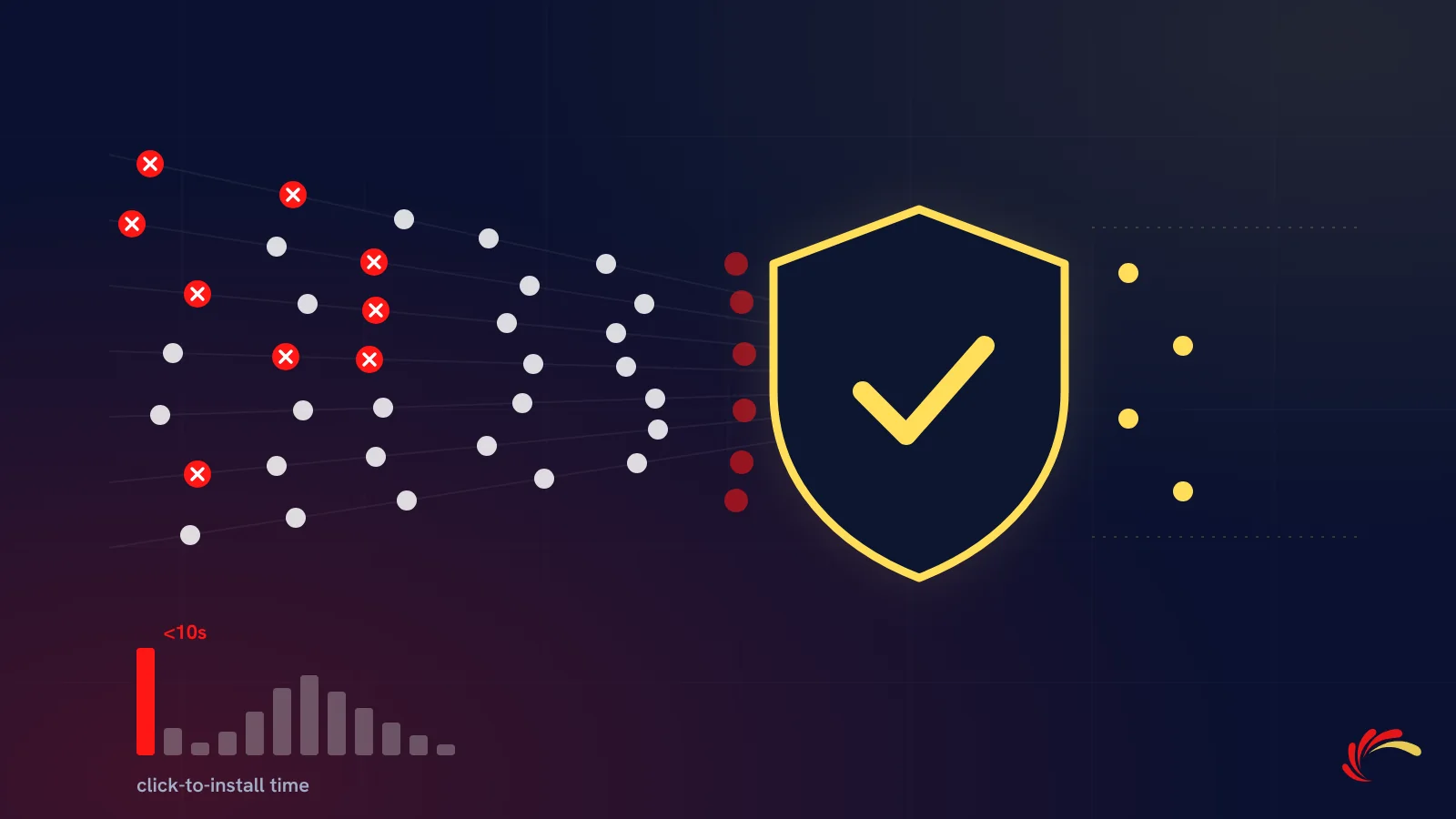
What goes wrong: paying for actions that are not real. Click injection, click spam and bots all produce installs that look like action on day one and disappear by day two. Our guide to seven signs of install fraud covers what to watch for.
AIDA on one table
| Stage | The user is asking | Metrics | Usually priced on |
|---|
| Awareness | "What is this?" | Impressions, reach, frequency, viewability | CPM |
| Interest | "Is this for me?" | Clicks, CTR | CPC |
| Desire | "Do I want it?" | Store page conversion, lead completion | CPL |
| Action | "Let me try it." | Installs, registrations, deposits, purchases | CPI, CPA, CPR, CPS |
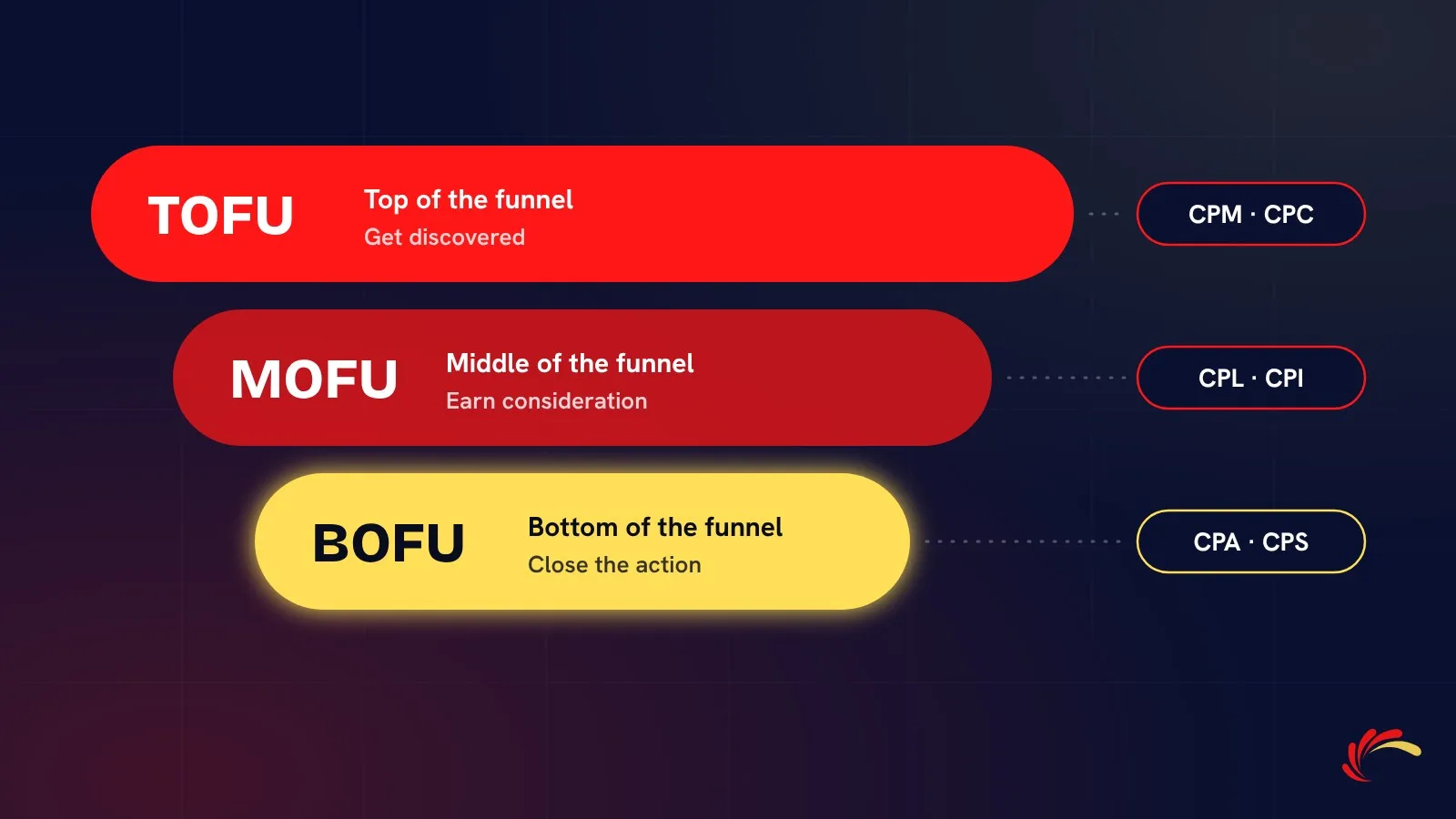
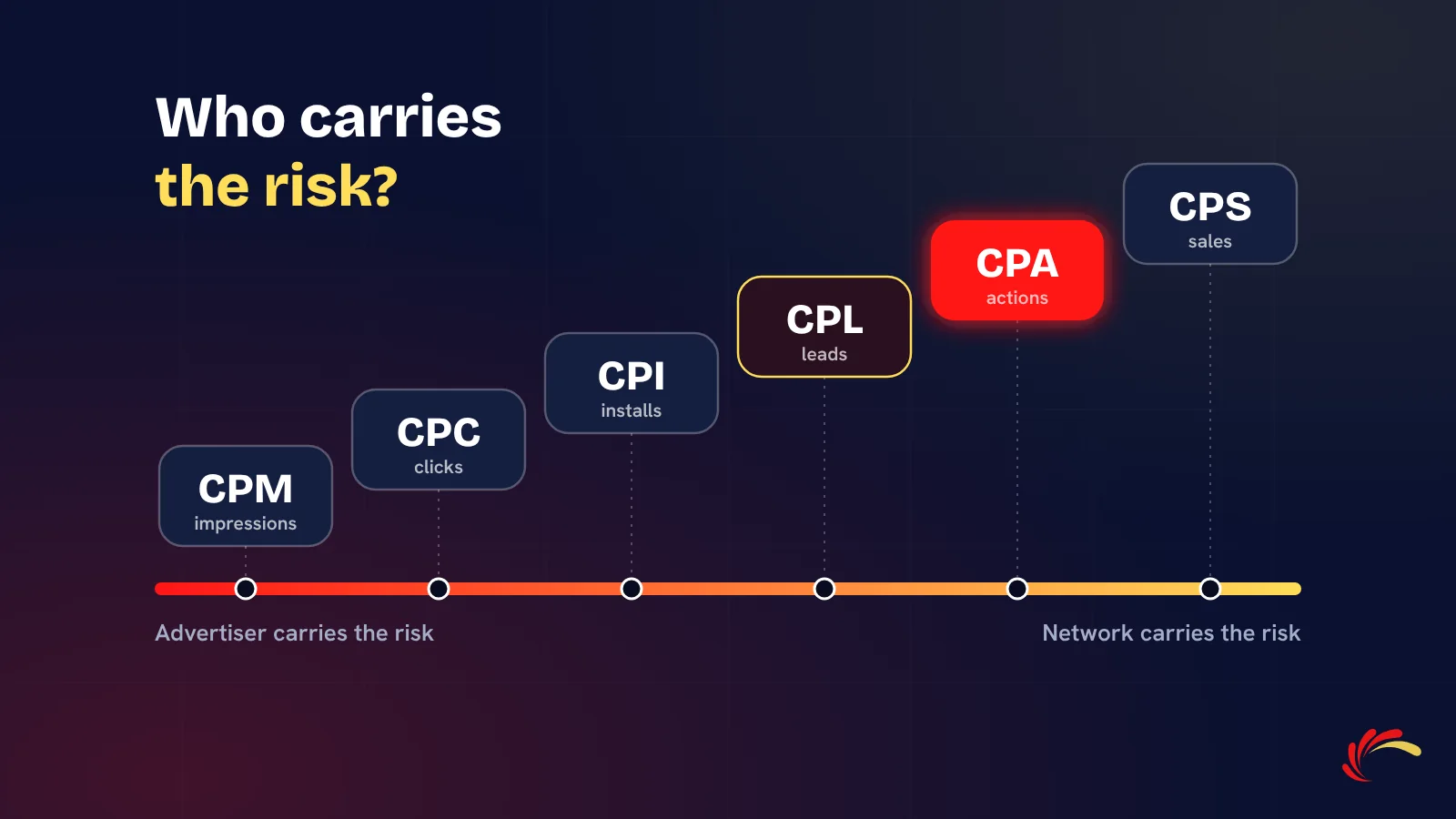
Notice how the pricing models line up with the stages. The further down the funnel you pay, the more risk moves from you to the network. Our pricing model guide goes into how to choose.
Using AIDA to fix a campaign
The real value of AIDA is diagnosis. When a campaign underperforms, find the stage where people drop off and fix that stage, instead of changing everything at once.
- Lots of impressions, few clicks: an interest problem. Test new creatives and hooks.
- Healthy CTR, few installs: a desire problem. Fix the store page or landing page.
- Plenty of installs, few events: an action problem. Check traffic quality first, then your onboarding.
- Good events, users gone within a week: that one is not in AIDA at all. Read on.
The step AIDA leaves out
AIDA ends at action, because in 1900 the sale was the finish line. For an app, a subscription or a trading platform, the install is closer to the starting line. A user who deposits once and never returns is rarely worth what you paid for them.
So at Adperience we use a slightly longer version. We call it AIDAR, and the R stands for Retention: the user keeps coming back, day 1, day 7, day 30. That is where lifetime value and real return on ad spend come from, and it is the step we optimise our traffic sources toward.
Yes, we added a letter to a hundred-year-old model. We think Mr Lewis would have approved, if he had ever had to explain a day-7 retention curve to a CFO. You can watch AIDAR build itself on our home page: scroll from the very top.
If you want us to look at your funnel stage by stage, send us your product, geos, target event and CPA. We will reply with a proposal by email.