If you work in app marketing or affiliate marketing, you will hear the term CPA network within your first week. It sounds technical, but the idea is simple: an advertiser pays only when a real person completes an action, and the network finds the people who will complete it.
This guide explains how a CPA network works from start to finish: who is involved, how a conversion is tracked, how the money moves, and what to check before you choose one. It is written for advertisers and publishers who are new to the model, and for anyone who wants a clear picture to share with their team.
What a CPA network is
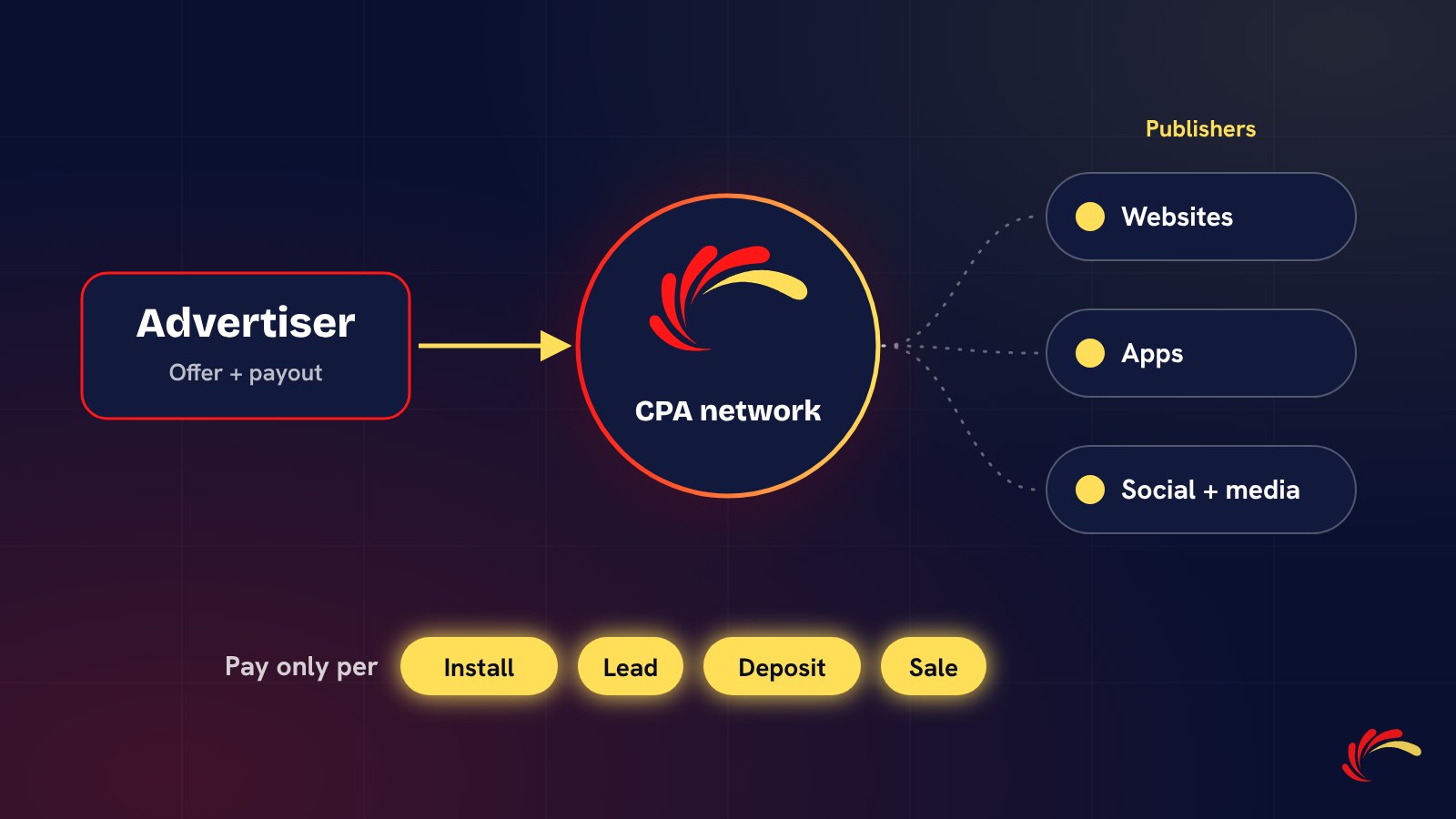
CPA stands for cost per action. A CPA network is a company that connects advertisers, who want a specific result, with publishers, who own the traffic that can deliver it. The network runs the tracking, checks the quality of every conversion, and handles payments on both sides.
The key difference from most advertising is when money changes hands. With a normal ad, you pay for the chance that someone notices you: an impression or a click. With CPA, you pay only after the action you care about has happened, such as an app install, a sign-up, a lead form or a purchase.
In one line: the advertiser says "I will pay ₹X for every Y", and the network finds publishers who can deliver Y at a price that works for everyone.
The three parties
- The advertiser has a product to grow: an app, a website, a financial product, an online course. They decide which action they will pay for and how much it is worth to them.
- The network sits in the middle. It sets up the campaign, gives each publisher a tracking link, records every click and conversion, filters out fraud, and pays publishers from what the advertiser pays.
- The publishers bring the audience. They might run websites, apps, social pages, email lists, push notifications or their own paid media. They earn a fixed amount for each approved action.
Advertisers could, in theory, find hundreds of publishers on their own. In practice, the network saves both sides from negotiating, tracking and paying each other one by one.
How a conversion is tracked, step by step
Tracking is the backbone of the whole model, because nobody gets paid unless the action is recorded correctly. Here is what happens behind a single conversion:
- A publisher shares their unique tracking link for the offer.
- A user clicks it. The network records the click and gives it a click ID, a unique code for that visit.
- The user lands on the advertiser's app store page or website, carrying the click ID with them.
- The user completes the action: installs and opens the app, fills in a form, makes a deposit.
- The advertiser's system, or their attribution partner (an MMP such as AppsFlyer, Adjust or Branch), sends a postback to the network. A postback is a small server-to-server message that says "click ID 123 converted".
- The network matches the postback to the click, runs its quality checks, and credits the publisher.
Because the postback travels directly between servers, it does not depend on browser cookies, which makes it far more reliable for app campaigns. It also means advertiser and network see the same numbers.
How the money moves
The advertiser agrees a payout per action with the network. The network offers publishers a slightly lower payout and keeps the difference to cover tracking, fraud prevention, account management and the risk of paying publishers before the advertiser pays.
As an illustration, an advertiser might pay ₹200 for each verified loan application. Publishers might earn ₹150 to ₹170 for the same lead. If a publisher sends 500 approved leads in a month, the advertiser is billed ₹1,00,000 and the publisher earns ₹75,000 to ₹85,000. These numbers are only an example; real payouts depend on the vertical, the geo and the quality required.
Payments usually run on a cycle. Many networks pay publishers on NET30 terms, which means 30 days after the invoice, so there is time to confirm that conversions were genuine.
Which actions can you pay for?
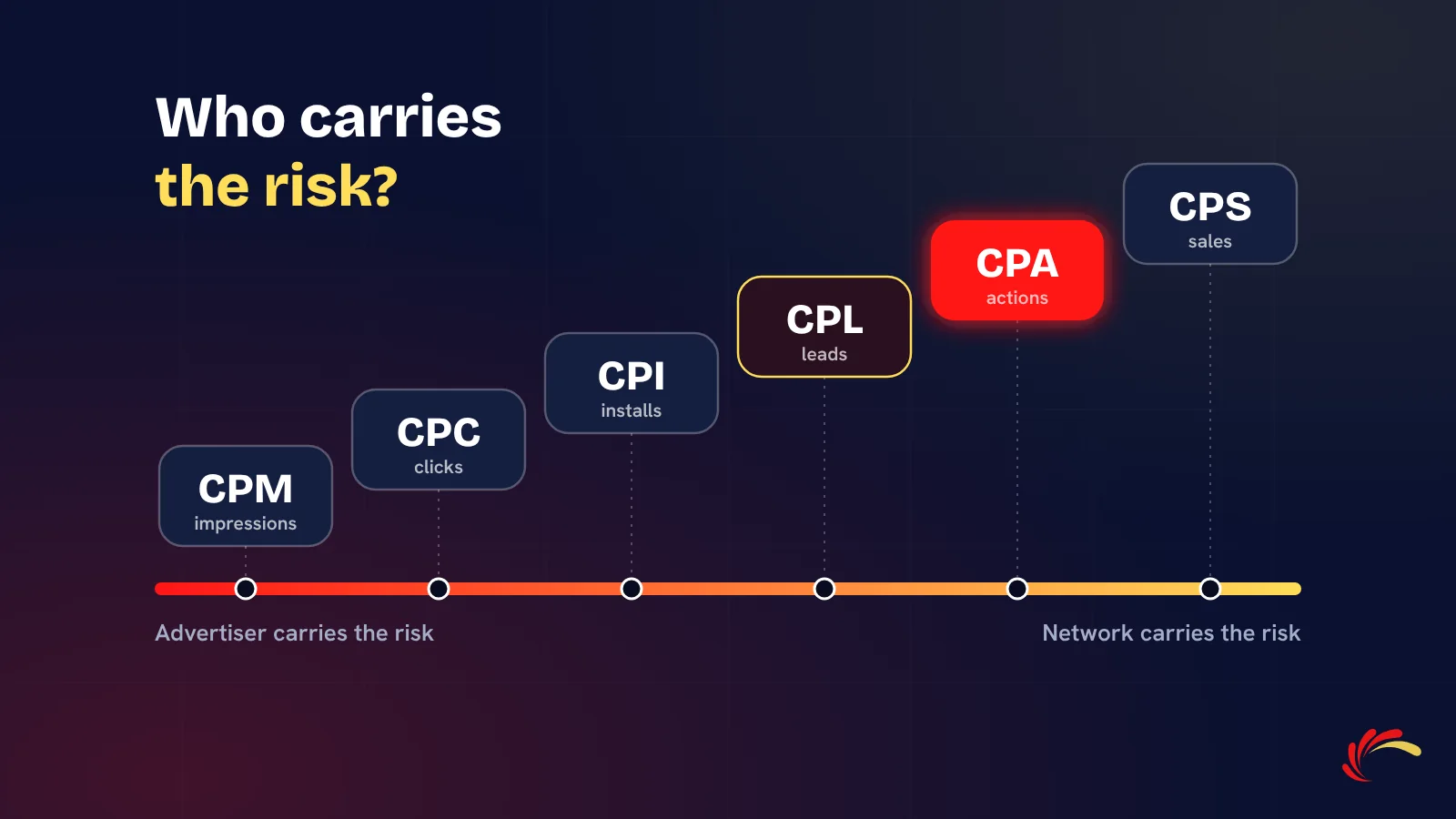
"CPA" is often used loosely for any pay-per-result deal. The action itself gives each model its name:
ModelYou pay forCommon in CPIAn app install (often with a first open)Gaming, utility and new apps CPRA registration or sign-upFintech, trading, dating, edtech CPLA lead: a completed form or enquiryLoans, insurance, education, real estate CPAA deeper event you define, such as a KYC or first depositFintech, trading, gaming CPSA sale, often as a percentage of order valueE-commerce, subscriptions The deeper the action, the less risk the advertiser carries and the higher the payout has to be. Our guide to choosing a pricing model goes into how to pick one and work out a payout you can afford.
CPA network, ad network or direct affiliate programme?
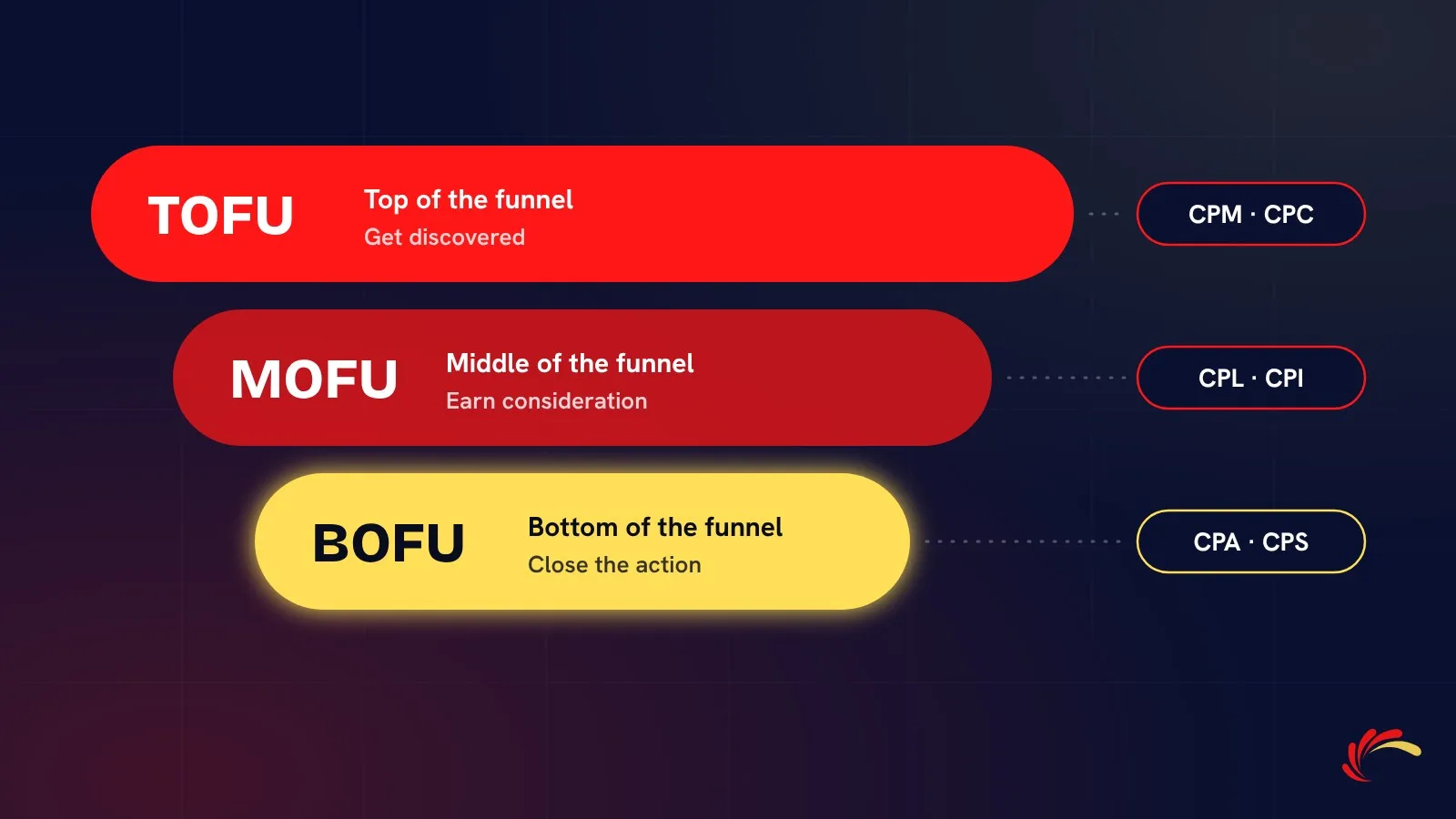
Ad networkCPA networkDirect affiliate programme You pay forImpressions or clicksVerified actionsVerified actions Who finds publishersThe networkThe networkYou Who tracks and pays themThe networkThe networkYou Your riskHigherLowerLower, but more work Many advertisers use more than one. A common pattern is to run awareness on ad networks and social platforms, and to scale the bottom of the funnel through CPA, where every rupee is tied to a result.
Why advertisers use a CPA network
- You pay only for results. Budget goes to installs, leads or sales, not to impressions that may never convert.
- Reach you could not build alone. One campaign can run across many publishers and countries at once.
- Speed. A good network can go live within days, because the publishers and tracking already exist.
- Fraud filtering before billing. Suspicious conversions are rejected before you pay for them.
There are trade-offs too. You have less control over exactly where your offer appears, so clear traffic rules matter. And quality varies a lot between networks, which is why the checks below are worth doing.
Why publishers use a CPA network
- Many offers in one place. One account gives access to campaigns from many advertisers, so you can pick what suits your audience.
- One payment instead of dozens. The network collects from advertisers and pays you on one schedule.
- Tracking and stats handled for you. You see clicks, conversions and earnings in real time without building anything.
How to choose a CPA network
Whether you are an advertiser or a publisher, ask these questions before you start:
- Where does the traffic come from? Direct publishers are easier to control than long chains of sub-networks.
- How is fraud handled? Ask what is checked, when, and whether rejected conversions are billed or paid. Our article on signs of install fraud lists what to look for.
- How does tracking work? Server-to-server postbacks with your attribution partner are the standard for apps.
- What are the payment terms? Publishers should know the cycle and minimums; advertisers should know how disputes are handled.
- Who will you talk to? A named account manager who answers quickly saves more money than a slightly higher payout.
Getting started
Adperience Media is a performance network with direct publishers in more than 140 countries. Advertisers pay only for the action they choose, and conversions are checked for fraud before billing. Publishers get pre-tested offers, real-time stats and NET30 payouts.
If you are an advertiser, the fastest start is a short brief: your product, the geos you want, the action you will pay for and your target CPA. Our checklist on how to brief an affiliate network covers the rest, or send it to us and we will reply with a proposal by email. If you have traffic, you can see how publishing with us works.